









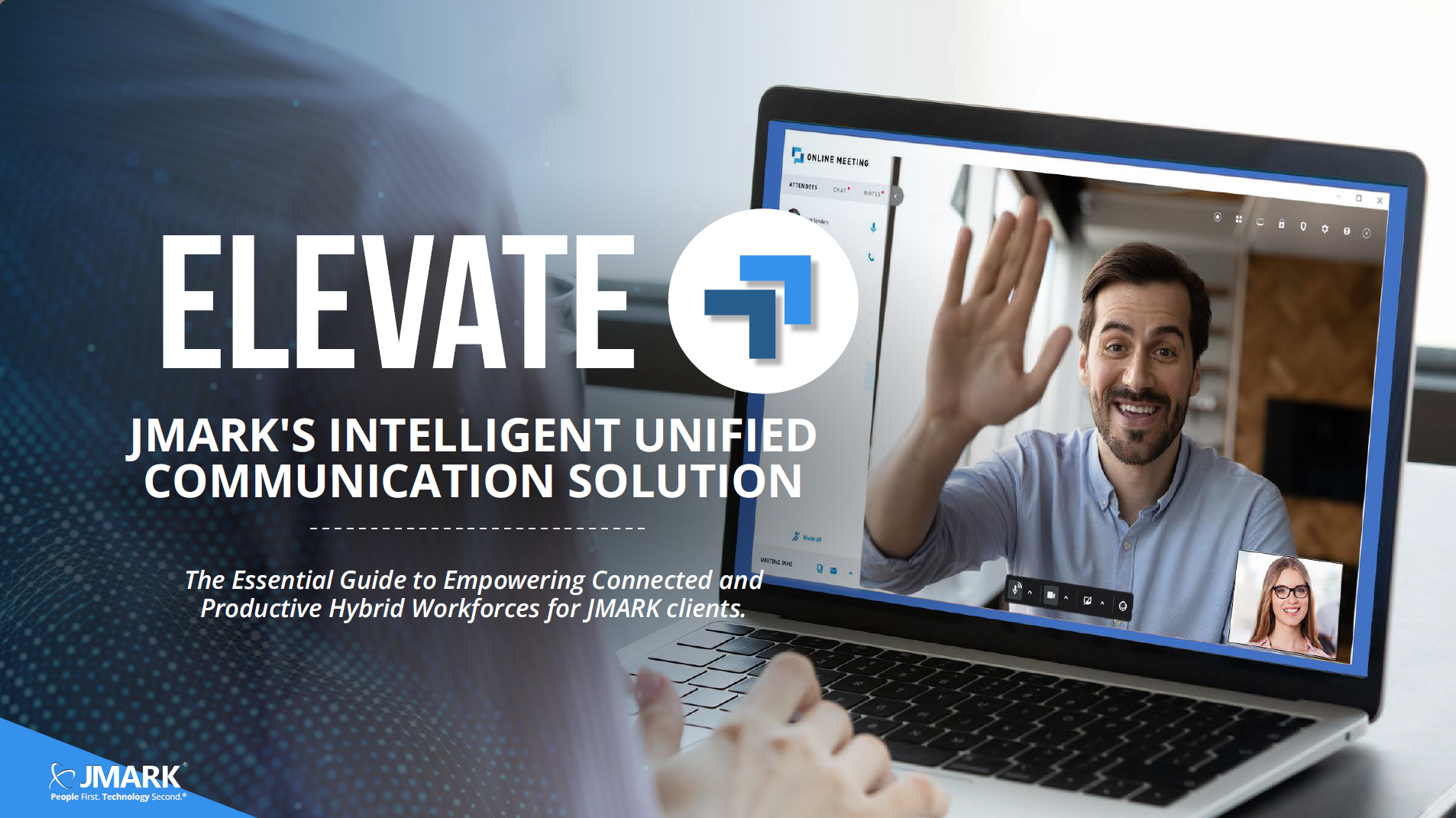
Elevate - JMARK's Intelligent Unified Communication Solution
Introduction No matter where you work, consistent and reliable communication is essential for any business. Your communication pathways, platforms,...
IT built for regulatory scrutiny and cyber risk backed by core system expertise.
HealthcareSecure, always-available clinical systems for patient care continuity.
Education & Public ServicesReliable infrastructure for always-on learning, government services, and mission-driven organizations.
24/7 multi-property uptime for complex hospitality environments.
Professional ServicesProtect billable productivity and client data—for law firms, engineering & consulting, architecture, and accounting.
ManufacturingOperational continuity for production systems and complex plant networks.
The Strategic IT Budgeting Guide
Access Guide ->
We are the stewards for the long-term success of our customers and employees.
Explore our culture -->
Meet the team -->
The #1 Best Place to Work in Southwest Missouri. We put people first.
Working at JMARK -->
Open Positions -->
April 17, 2026
10 min read
It's a typical Monday morning, and you're going through your routine when suddenly, you get an urgent call from your IT team. They inform you that your company's network has been compromised. Within minutes, critical data is encrypted, operations grind to a halt, and you receive a ransom demand that could cost your business thousands, if not millions, of dollars. As the minutes tick by, panic sets in—not just because of the immediate financial hit, but because you know your reputation is on the line. Clients will lose trust, and your competitors will take advantage of your vulnerability.
This scenario is every business leader's worst nightmare. The fear of being hacked, losing hard-earned money, and seeing your company's reputation destroyed probably keeps you up at night. The worst part? This is exactly what is happening to companies across the country.
In 2023, over 880,000 complaints about cybercrime were sent nationwide. Additionally, 117,000,000 records were exposed in online data breaches in Q2 of 2024.
These examples are only a fraction of the attacks that continue to affect businesses nationwide. And in a city like Tulsa, where local businesses are the backbone of the community, the stakes are even higher. The good news? You're not alone, and there are steps you can take to protect your company from these very real threats.
No matter the industry you're in, the strategies outlined here will provide the insights and actions you need to ensure the longevity of your business. Because cybercriminals are not going to stop. And with the rise of artificial intelligence, the ability to create complex scams and phishing attempts has never been easier.
The question is, what are you doing to fight back?
Ransomware has become one of the most significant threats to Tulsa businesses. In the last three years, Tulsa has experienced three major attacks. These attacks resulted in the theft of over 18,000 city files, including sensitive police citations and internal documents, emergency patients being diverted to other local hospitals, and temporary closure of some pharmacies. Residents' personal information, such as names, birth dates, and driver's license numbers, were also compromised.
This incident highlights the serious risk ransomware poses to both government entities and private businesses. No one is safe—no matter their size or status. These attacks can do serious damage—not only to your operations and finances but to your clients and employees, too.
Phishing remains one of the most common attack vectors. Cybercriminals often pose as legitimate businesses or organizations to trick users into revealing sensitive information. A single successful phishing attempt can compromise an entire network.
Phishing attacks are simple yet highly effective. They exploit human error, making them difficult to defend against without proper training. And when 31,000 phishing attacks are deployed daily? It's wise for your business to develop a culture of security.
Failing to keep systems and software up-to-date creates openings for attackers. Outdated software with known vulnerabilities is an easy target for hackers, which is probably why 60% of data breaches are caused by the failure to apply available patches.
A study found that 84% of companies have high-risk vulnerabilities, but half of them could be removed with a simple software update. This means that vulnerabilities and data breaches are preventable.
Cybercriminals love to exploit known vulnerabilities in outdated software to gain access to networks. But it is key to remain proactive and address minor issues before they become major obstacles. One of the best ways to do that? Talk to an IT expert and perform a network evaluation.
"In the current threat environment, slow or ineffective incident response isn't just a security gap—it's a business risk. Executives must recognize that prolonged breaches not only drain resources but also erode customer trust and market value. The longer the exposure, the higher the financial and reputational cost, making it critical to partner with an IT provider that can detect and contain threats swiftly to safeguard both operations and brand integrity."
— Eric Langendorfer, Director of Security Management, JMARK
To protect your business's proprietary data from becoming one of the next 117 million exposed records, here are some practical questions you should answer to level up your cybersecurity posture.
A strong cybersecurity culture has to start at the top. Leadership plays a critical role in not only fostering a culture of security awareness but also ensuring accountability within the organization.
Start by stating, "It might be us next!" The bad actors are most likely to get in through people and social engineering. The best security in the world will not be enough if a teammate lets the bad guys in. If you would like someone from the JMARK team to come in and speak with your organization about best practices, please contact us at 844-44-JMARK. We're happy to come in (virtually or in person) and provide context of how serious the threat is, why individual vigilance is so important, and how they can keep themselves and your organization safe.
This needs to include many layers of protection. A single IT department, an "IT Guy," or even a small MSP cannot have the necessary subject matter expertise and/or resources to deal with all the unique threats against different technologies. With state-sponsored groups and organized crime groups utilizing AI and machine learning, the gap has closed on the knowledge and technical skills needed to create hard-hitting attacks on your company's digital assets.
This person should be responsible for vetting and holding third-party integrations and current vendors accountable, developing business continuity and disaster recovery plans, conducting regular risk assessments, implementing IT governance frameworks, and coordinating internal and external security audits. They should also provide a security update to both the executive team and the board of directors.
The CEO or senior leader should bring up security as frequently as possible. Take 5 minutes, read a story, play a video, share a real-world experience about how the bad actors are shutting down businesses, costing them hundreds of thousands and sometimes millions of dollars. Many organizations cannot handle being down for weeks and paying $400k or more, even with insurance in place. Make the message real and personal and show how all the hard work of the team can be lost in a matter of hours through a simple click on a link in an email. Security management is everyone's responsibility.
In addition to the CEO sharing about the threats in meetings, we encourage you to have other leaders bring it up in team standups or departmental meetings. The team needs to be reminded from all levels within the business. Additionally, we recommend that you tie employee review scores to their security awareness.
We don't want to create an atmosphere of fear of stepping up when a mistake is made. In fact, you should cultivate the opposite. Your employees should be commended and rewarded for stepping up and saying, "I think I made a mistake." As a part of the review process, the supervisor should verify that all training has been completed, discuss if the user is helping others to be mindful and step forward if they suspect an issue.
From our checklist, you'll see that having Multi-Factor Authentication (MFA) and User Awareness training are high on the list. However, this should not be seen as a guarantee or provide a false sense of safety. MFA is awesome, but bad actors can deploy malware into an environment with as little as a click on a link. Awareness training and MFA together make a big difference, but keeping your team vigilant and engaged in the security process is vital.
Now that you know what to implement regarding cybersecurity, it's probably time to consider a partner who can help you with the how.
Many leaders hesitate to dive into IT due to a lack of technical background.
Here's the thing: Having a "guy" is great, but if you can't oversee your IT team and processes from both a macro and micro level, the reality is that there could be unseen threats that you'd never know about until it's too late.
The goal isn't to become an IT expert. It's to understand enough so you can ask the right questions and make informed decisions.
To help you know what to look for, here are 9 key questions that will ensure you know exactly what your IT partnership currently offers, why it's important, and whether it's what you truly need.
Expected Answer: Whether internal or external, your IT solution should detail their security measures—such as data encryption, secure storage, and regular security audits. For compliance, they should be able to explain how they ensure your company meets all necessary regulations efficiently.
Expected Answer: Your IT team or provider should outline a regular maintenance schedule that includes system updates, optimizations, and hardware assessments. They should also have a strategy for forecasting hardware end-of-life and planning replacements well in advance to avoid operational interruptions.
Expected Answer: Whether you have an internal team or work with an MSP, you should receive a detailed breakdown of your expenses. This includes hardware, upcoming deployments, software applications, and their purpose. Your IT team or provider should be able to explain the function and business impact of every budget item.
Expected Answer: Your IT team or MSP should have a clear process for assessing issue severity and regularly communicating risks and mitigation steps with you to keep your business informed.
Expected Answer: Look for an answer that covers proactive monitoring, use of advanced cybersecurity tools, and regular risk assessments. Both in-house teams and MSPs should prioritize keeping systems updated to protect against emerging threats.
Expected Answer: Your IT solution should have a plan in place to manage growing data, increasing user loads, and integrating new technologies. Whether it's an internal team or an MSP, they should ensure seamless scalability.
Expected Answer: Your IT solution should demonstrate how they support strategic IT planning. This includes conducting technology assessments, identifying solutions that align with business objectives, and planning for future industry trends to keep your business ahead of the curve.
Expected Answer: Your IT team or provider should have a strategy for technology integration that minimizes disruptions while leveraging your current systems. They should also assess compatibility and test new technologies before fully implementing them.
Expected Answer: You should expect a detailed incident response protocol, which includes assessment, containment, and mitigation strategies. They should also explain how they communicate during incidents and what processes they follow to learn from and prevent future occurrences.
Like any relationship, success is found in the commitment to continually working and improving. In light of that, here are some ways you can continue building a healthy IT partnership with your provider.
Make it a habit to meet regularly with your IT team or provider. Use these check-ins to go over your goals, talk about any new technologies, and make sure your IT strategy is aligned with your business needs. This helps turn your IT provider into a true partner, not just a service.
Work with your IT provider to outline clear success metrics—like how quickly issues are resolved, how satisfied users are, or how reliable the system is. Check in on these regularly to make sure your partnership is delivering what you need.
Foster a culture where continuous improvement is encouraged. Ask your IT provider to share new technologies or processes that might benefit your business, and stay open to fresh ideas.
While the goal is to build a long-lasting relationship, it's smart to have an exit plan just in case. Make sure you know the steps involved if you ever need to switch providers.
In 2021, the FBI reported that cyberattacks cost Oklahoma businesses $15 million. And as tools like AI lower the barrier of entry for hackers, these attacks will only grow more frequent.
While IT and cybersecurity are complex, they shouldn't be frustrating. If you're facing any bottlenecks that are preventing your growth, or just want to know what makes for a win-win partnership, we'd love to talk with you.
Schedule a consultation with one of our IT experts, and we'll help you build a potential roadmap for blowing through those bottlenecks. No hard sell—just a conversation to ensure you have all the tools you need to help your business perform at its best.
Introduction No matter where you work, consistent and reliable communication is essential for any business. Your communication pathways, platforms,...
Introduction Every leader has that moment. Maybe it’s the second hour into an audit or the third “urgent” email from IT this week. You look at the...
Executive Perspective Business leaders now field specific pitches about AI-enabled forecasting in their ERP systems, virtual assistants within their...