









2 min read
How to Protect Your Tulsa Business from Cyber Threats
In a community like Tulsa, where local businesses are the heart of the economy, the stakes for digital safety have never been higher. Last year saw a...

IT built for regulatory scrutiny and cyber risk backed by core system expertise.
HealthcareSecure, always-available clinical systems for patient care continuity.
Education & Public ServicesReliable infrastructure for always-on learning, government services, and mission-driven organizations.
24/7 multi-property uptime for complex hospitality environments.
Professional ServicesProtect billable productivity and client data—for law firms, engineering & consulting, architecture, and accounting.
ManufacturingOperational continuity for production systems and complex plant networks.
The Strategic IT Budgeting Guide
Access Guide ->
We are the stewards for the long-term success of our customers and employees.
Explore our culture -->
Meet the team -->
The #1 Best Place to Work in Southwest Missouri. We put people first.
Working at JMARK -->
Open Positions -->
Eric Langendorfer
, Eric Langendorfer is currently the director of security management for JMARK. His passion for security started while working in the banking industry, and at this point over half of his 20 years of experience in information technology has focused on security. He joined JMARK in 2009 and soon realized that JMARK’s broad client base provides great visibility into security threats faced by small and medium-sized businesses. He continues to assist in developing and managing Information Security Programs, including policies, employee awareness training, risk management, disaster recovery, and incident response.
TL;DR
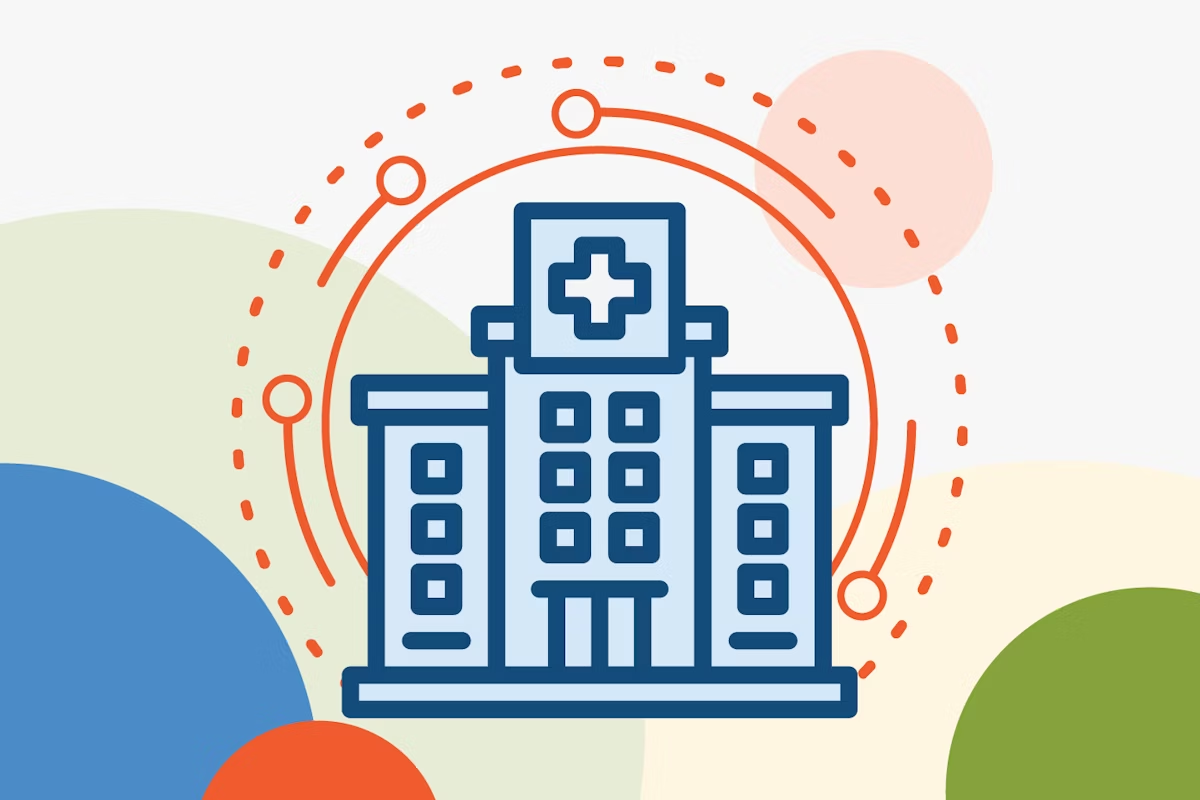
After ransomware crippled Ascension Healthcare Network, it's clear no organization is immune. Protect your healthcare company with these 5 steps: strong password policies, regular software updates, employee phishing training, data encryption, and a tested incident response plan.
When Black Basta ransomware hit Ascension Healthcare Network — a nonprofit with over 140 hospitals across 19 states and 177,000 employees — it forced patient diversions, rescheduled appointments, and a revert to manual systems. The attack was a stark reminder: healthcare organizations are major targets, and the stakes couldn't be higher.
Whether it's disrupted phone systems, compromised medications, or leaked patient data, your organization can't afford to be caught off guard. Here are the 5 best practices to protect your healthcare company before an attack ever happens.
Encourage employees to create complex passwords using a combination of upper- and lower-case letters, numbers, and special characters. Consider using a password manager like LastPass to generate and store strong, unique passwords securely.
What You Can Do: Require password changes every 60–90 days and enable two-factor authentication (2FA). For even stronger protection, use a multi-factor authentication app like Microsoft Authenticator to generate one-time login codes.
Outdated software contains vulnerabilities that cybercriminals actively exploit. Regular updates and patches close these security gaps while also improving system performance and reducing unnecessary downtime.
What You Can Do: Set up automatic updates for operating systems and applications, and assign someone to monitor them. Don't forget to update medical devices and any equipment connected to your network. If managing updates feels overwhelming, consider partnering with an MSP like JMARK to handle your tech needs so you can focus on patient care.
Employees are often the first line of defense against cyber threats. Some of the largest data breaches in history — like the Anthem breach affecting 78.8 million records — began with a single phishing email.
What You Can Do: Hold regular training sessions on identifying phishing emails, proper data handling, and reporting suspicious activity. Use simulated phishing attacks to test and strengthen your team's response. The more they know, the more confident they'll be in spotting and avoiding threats.
Encryption converts data into a code that cannot be read without a decryption key — even if it's intercepted. It's one of the most effective ways to protect patient records, billing information, and internal communications.
What You Can Do: Encrypt all sensitive data both in transit and at rest. Use Secure Sockets Layer (SSL) encryption for emails and websites to ensure that data transmitted between servers and browsers remains private and secure.
An incident response plan outlines how to detect, respond to, and recover from a cyberattack. Yet according to CompTIA, only 37% of companies include one as part of their cybersecurity strategy.
What You Can Do: Create a detailed, customized incident response plan that includes steps for containment, eradication, and recovery — tailored specifically to your organization's structure. Conduct regular drills and update the plan based on lessons learned. This will help reduce downtime, protect your reputation, ensure compliance, and minimize financial losses.
To protect your healthcare organization, follow these 5 best practices:
Cyberattacks are growing more frequent and more sophisticated — but you can fight back. Prioritizing a strong security posture protects your finances, your public trust, and most importantly, your patients.
Ready to take action? Grab our cybersecurity checklist for a detailed breakdown of how to keep your patients safe. Or call 844-44-JMARK to speak with one of our IT and security experts for a personalized plan.
Schedule a Network Evaluation to see how we can work together.
2 min read
In a community like Tulsa, where local businesses are the heart of the economy, the stakes for digital safety have never been higher. Last year saw a...
2 min read
Last year witnessed a record-setting number of cybersecurity incidents, signaling a shift in the digital landscape where hackers are more persistent,...
2 min read
Summer is usually defined by warmer days, longer nights, and a much-needed break from the office. But while your team is kicking back on the beach,...