



2 min read
Strategic IT Asset Management: Maximizing Efficiency and ROI
IT Asset Management (ITAM) software is fast becoming the go-to solution for businesses that want more than just cost savings—they want a strategic...
IT built for regulatory scrutiny and cyber risk backed by core system expertise.
HealthcareSecure, always-available clinical systems for patient care continuity.
Education & Public ServicesReliable infrastructure for always-on learning, government services, and mission-driven organizations.
24/7 multi-property uptime for complex hospitality environments.
Professional ServicesProtect billable productivity and client data—for law firms, engineering & consulting, architecture, and accounting.
ManufacturingOperational continuity for production systems and complex plant networks.
The Strategic IT Budgeting Guide
Access Guide ->
We are the stewards for the long-term success of our customers and employees.
Explore our culture -->
Meet the team -->
The #1 Best Place to Work in Southwest Missouri. We put people first.
Working at JMARK -->
Open Positions -->
Thomas H. Douglas
, CEO
TL;DR
Effective 1:1 meetings are the most critical tool for employee retention and management in today’s hybrid work environment. By using consistent agendas and the right technology, leaders can move beyond status updates to build meaningful alignment and professional growth.
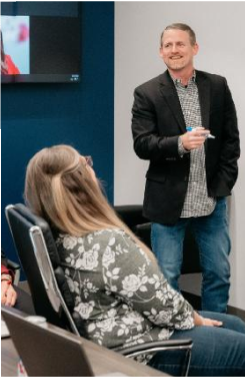
It has been said for years that people do not leave companies; they leave managers. In an environment defined by hiring and retention challenges, this sentiment is truer than ever. Effective leadership hinges on the quality of one-on-one (1:1) interactions, yet many managers struggle to move these meetings beyond surface-level status updates. When 1:1 meetings are executed with the right blend of technology and human-centric leadership, they become the primary engine for alignment and employee satisfaction. Whether your team is in-office, remote, or hybrid, dependable communication is the bedrock of a successful organization.
To facilitate meaningful dialogue, we recommend using a platform specifically designed for 1:1 meetings. While your existing payroll or HR platform may offer these features, the goal is to find a system that ensures information is secure, portable, and accessible for advance preparation. A great system allows for scoring and performance tracking over time. Solutions like PI Perform from The Predictive Index are excellent for this purpose. If you prefer to use existing tools, you can achieve similar results by integrating a form into Microsoft Teams. This allows you to set up a dedicated space for each individual where you can host weekly, quarterly, or annual check-in forms.
Consistency is the key to a productive meeting. We recommend an agenda that covers three distinct areas: operational challenges, personal development, and professional development. By keeping the core questions the same for at least a quarter, you create a baseline for progress. This structure allows both parties to prepare the day before the meeting, ensuring that the actual time spent together is focused on coaching and strategy rather than just gathering facts. If a dedicated platform is not an option right now, a shared spreadsheet can serve as a functional record of progress and collaboration.
The first part of any 1:1 should clear the path for the employee to do their best work. This is the time to identify roadblocks before they become crises. We recommend asking questions that define success and identify missing resources:
Retention is built on seeing the employee as a person, not just a producer. This section of the meeting should address stress levels and individual achievements. We find it helpful to ask about the biggest challenges an employee is facing, even those outside of work, while giving them the space to share only what they are comfortable with. Professionally, use a scale of one to five to gauge performance. Discussing why a supervisor’s rating might differ from an employee’s self-evaluation prevents surprises during annual reviews and ensures everyone is working toward the same standard.
High-performing teams are those where everyone pulls their weight and the culture remains healthy. Use your 1:1 time to get a pulse on the team by asking who else deserves recognition or if there are skills the group is missing. This is also the ideal time to discuss "superpowers"—the unique strengths an employee has and the ones they wish to develop. When you align an individual’s long-term goals with the company’s trajectory, you create a powerful incentive for them to stay and grow within your organization.
A 1:1 is a two-way street. It is a vital opportunity for the supervisor to receive feedback on their own management style. Ask your team members what they like or dislike about your approach. On the flip side, use this time to recognize them as "unsung heroes" for the tasks that often go unnoticed. By maintaining this level of transparency and mutual accountability, you transform IT and operations from a simple cost center into a business accelerator.
No matter where your work gets done, we have made it our priority to help you make the most of your technology and your talent. If you are looking to enhance your remote or hybrid environment while keeping accountability high, we can help. Schedule a Network Evaluation or call us at 844-44-JMARK to see how our services and support can be customized for your business.
2 min read
IT Asset Management (ITAM) software is fast becoming the go-to solution for businesses that want more than just cost savings—they want a strategic...
1 min read
The MGM Resorts incident served as a stark reminder of the vulnerabilities inherent in the hospitality sector and the dire consequences of inadequate...
2 min read
Think of your business like a car and your technology like the engine. To keep that car running smoothly and reliably, you need more than just an...