








 Thomas H. Douglas
How Reactive IT Costs Erode EBITDA and How to Fix It
 Thomas H. Douglas : 4/17/26, 11:44 AM
Reactive IT support acts as a silent "morale tax," potentially costing mid-market firms over $800,000 annually in lost productivity. By shifting to...

In this Article
TL;DR
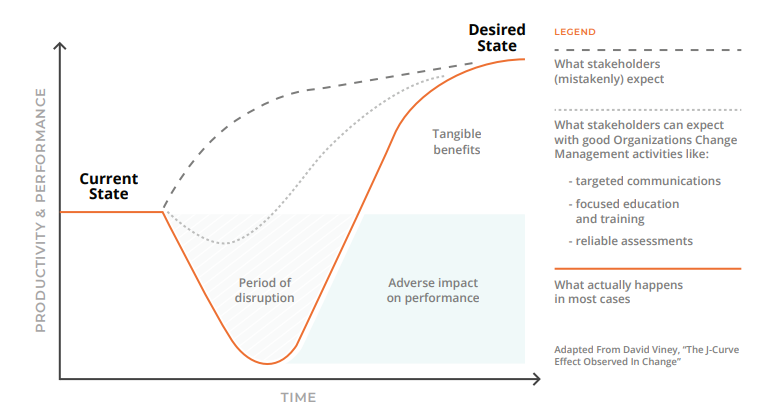
Profitability through technology is often viewed as an impossible dream, but the reality is that many organizations fail to realize these gains simply because they lack a focus on innovation. While new software applications often promise to save jobs, they frequently introduce a "J-Curve" effect where productivity initially dips due to new challenges and training requirements. However, by approaching IT with intentionality, you can move past this period of disruption and unlock tangible benefits that drive your bottom line.
Culture famously eats strategy for breakfast because it reduces management headaches while increasing productivity and alignment. At JMARK, we have seen how IT, combined with strong leadership, helps organizations build a more resilient culture. Tools like Workplace and Zoom allow our team to stay informed and connected to parts of the business they may not interact with daily. Most importantly, these technologies break down silos, allowing every level of the organization to connect with leadership and vice versa.
Successful teamwork is impossible without successful communication. The right technology speeds up an organization and ensures that sales and marketing teams are perfectly aligned with production. It is common for a business to have excess inventory in one area while the sales team remains unaware. By using technology to communicate clear expectations regarding backlogs or production challenges, we ensure that our focus stays on the right products and that service reality meets customer expectations.
Modern professionals require flexibility to balance their individual lifestyles. Organizations that empower their people to work from home or on the road are better equipped to retain top talent and provide superior customer experiences. Since losing good people is one of the most expensive challenges in business, creating flexibility is a direct path to improving your profits.
The way people consume products has shifted dramatically, moving toward online engagement in nearly every industry. To stay competitive, businesses must meet their prospects where they are, making it easier and faster for them to consume services. By using market studies and candid customer conversations to drive innovation, you can outperform the competition and increase sales.
Few things frustrate employees and customers more than hearing that a system is down or running slowly. A mature IT design avoids these disruptions, which directly improves customer satisfaction and retention. Furthermore, reliable systems help with employee retention, as a stable work environment reduces daily friction for your team.
Most organizations only utilize about 30% of their applications' capabilities. By investing in thorough training that covers security, best practices, and compliance, you can extract the full value of your IT investment. We recommend standardizing processes for core applications, document storage, and even simple tasks like email management to ensure companywide efficiency.
Technology will always face challenges, but the key to profitability is how quickly those issues are resolved. Users often struggle with a problem for days because they do not know how to engage the right resources. When IT support is fast, easy, and enjoyable, technical hurdles no longer prevent your team from maximizing their performance.
Simplicity is the ultimate sophistication in IT. Many organizations suffer from "application bloat," maintaining redundant software and support agreements that drive up costs. By reducing the number of applications, you lower your infrastructure requirements and subscription fees. A simplified network is easier to support, leading to reduced IT costs and higher profitability.
A single successful cyberattack can ruin a business. While security investments are an expense, they protect against breaches that could cost millions. By maintaining a strong security posture and a solid business continuity plan, you transform a potential catastrophe into a minor incident with no substantial cost.
To see how these strategies can be applied to your specific business, contact us today to discuss your IT strategy or call 844-44-JMARK. You can also visit our website to Schedule a Network Evaluation at www.jmark.com.
 Thomas H. Douglas : 4/17/26, 11:44 AM
Reactive IT support acts as a silent "morale tax," potentially costing mid-market firms over $800,000 annually in lost productivity. By shifting to...
 Thomas H. Douglas : 4/17/26, 1:58 PM
Stop the troubleshooting cycle. Learn how IT management software saves SMBs time through automation, scalability, and unified business solutions.
 Thomas H. Douglas : 4/17/26, 4:10 PM
Protect your bank from the chaos of private equity rollups. Learn why JMARK’s private ownership ensures stable, compliant, and personal IT support.